

Top 12 Essential Oils for Skincare Formulations and Safe Use
Which Essential Oils Are Best for Skincare Formulations and How Can You Use Them Safely?
Choosing essential oils for skincare formulation means selecting oils that provide measurable skin benefits while meeting dermal safety thresholds. The right essential oil should improve the skin’s condition without causing irritation, sensitization, or phototoxic reactions. Safe use relies on controlled dilution and adherence to IFRA dermal limits. Leave-on formulations typically require precise dilution ratios between 0.3% and 2%, depending on the oil’s composition. IFRA guidelines help prevent adverse reactions by limiting the concentration of aromatic compounds in cosmetic applications. Each essential oil described later includes five key parameters: benefits, dilution percentage for skincare, IFRA note, contraindications, and formulation guidance. These parameters allow formulators to make evidence-based choices rather than relying solely on aroma preference. Essential oils used on the skin must be cosmetic grade and verified through comprehensive quality analysis and a Certificate of Analysis (COA) to confirm natural composition and safe dermal usability.What Criteria Determine Whether an Essential Oil Is Suitable for Skincare?
Suitability of an essential oil for skincare is determined by purity percentage, quality verification, IFRA category, allergen content, and dermal safety data. These parameters ensure the oil enhances the skin without compromising safety or product stability. Purity is confirmed through comprehensive quality analysis. A purity value of 98% or higher indicates the oil contains only natural aromatic compounds without synthetic adulteration. COA documents provide traceability for extraction method, batch origin, and compositional values. The IFRA category defines the maximum safe concentration of each essential oil in cosmetic products. Leave-on applications follow stricter limits than rinse-off formulas due to longer skin contact time. Allergen content must be evaluated carefully. Compounds such as limonene and linalool require label declaration at 0.001% in leave-on products and 0.01% in rinse-off products under international cosmetic guidelines. Dermal safety is achieved through evidence-based dilution percentages, typically ranging from 0.3% to 2%, depending on oil chemistry and skin sensitivity. Higher concentrations increase the risk of irritation and sensitization without improving cosmetic performance. These criteria form a technical oil selection checklist, allowing formulators to compare essential oils objectively before creating creams, serums, or cleansers.What Are the Top 12 Essential Oils for Skincare and How Do You Use Them?
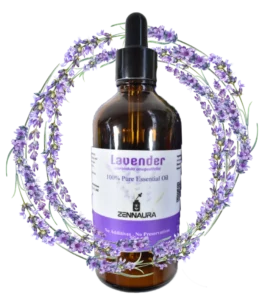
This section contains 12 micro subsections, one per essential oil. Each subsection must include benefits, recommended dilution percentage, IFRA remark, contraindications, and formulation tip.Lavender (Lavandula angustifolia)
Supports sensitive and dry skin through soothing and barrier calming effects.- Dilution: 0.5 percent to 1.5 percent for leave on skincare.
- IFRA: generally permitted for facial use under Category 4.
- Contraindications: avoid if an individual has lavender sensitivity.
- Formulation tip: combines well with jojoba oil and vitamin E to support barrier repair.
Chamomile Roman (Anthemis nobilis)
Reduces redness and irritation due to bisabolol and chamazulene content.- Dilution: 0.3 percent to 1 percent.
- IFRA: compatible with leave on facial products under Category 4.
- Contraindications: avoid use around eyes on reactive skin.
- Formulation tip: integrate into calming serums for sensitive skin.
Rose Otto (Rosa damascena)
Improves hydration and elasticity in mature and dry skin.- Dilution: 0.3 percent to 0.8 percent.
- IFRA: permitted in facial serums within Category 4 guidelines.
- Contraindications: may trigger sensitivity in highly reactive skin.
- Formulation tip: pairs well with squalane and argan oil for evening products.
Geranium (Pelargonium graveolens)
Balances sebum and supports combination skin types.- Dilution: 0.5 percent to 1.2 percent.
- IFRA: follow Category 5A for body lotion compatibility.
- Contraindications: avoid during pregnancy due to hormonal response concerns.
- Formulation tip: blend with hazelnut carrier oil for oil balancing emulsions.
Frankincense (Boswellia Carterii)
Promotes firmness and supports fine line reduction.- Dilution: 0.4 percent to 1.2 percent.
- IFRA: permitted for facial application in Category 4.
- Contraindications: avoid use on broken skin.
- Formulation tip: include in night creams due to slow absorption rate.
Tea Tree (Melaleuca alternifolia)
Tea Tree (Melaleuca alternifolia)- Dilution: 0.3 percent to 1 percent for leave on products.
- IFRA: adhere to Category 5A limits for body products.
- Contraindications: avoid use on very dry or compromised skin.
- Formulation tip: supports salicylic acid acne formulations.
Helichrysum (Helichrysum italicum)
Supports scar appearance and skin recovery.- Dilution: 0.3 percent to 0.8 percent.
- IFRA: permitted under Category 4 for facial leave on.
- Contraindications: avoid use on infants.
- Formulation tip: combine with rosehip oil to support skin regeneration.
Neroli (Citrus aurantium amara)
Supports elasticity and tone in dull or stressed skin.- Dilution: 0.5 percent to 1 percent.
- IFRA: Category 4 approved for face serums.
- Contraindications: avoid on damaged skin when undiluted.
- Formulation tip: works well in hydration boosting essences.
Sandalwood (Santalum album)
Supports moisture retention and calms irritated skin.- Dilution: 0.4 percent to 1 percent.
- IFRA: permitted in facial skincare in Category 4.
- Contraindications: avoid during early pregnancy.
- Formulation tip: enhances lipid rich night moisturizers.
Patchouli (Pogostemon cablin)
Supports skin barrier function and improves texture.- Dilution: 0.3 percent to 0.8 percent.
- IFRA: permitted under Category 5A for body products.
- Contraindications: avoid in heavy formulations for acne prone skin.
- Formulation tip: blends well with frankincense for firming creams.
Carrot Seed (Daucus carota)
Supports tone and brightness due to antioxidant compounds.- Dilution: 0.3 percent to 0.6 percent.
- IFRA: follow Category 4 values for facial creams.
- Contraindications: avoid during pregnancy.
- Formulation tip: best used in vitamin rich daytime creams.
Lemon Balm or Balm Mint (Melissa officinalis)
Supports sensitive skin with calming and anti redness effects.- Dilution: 0.2 percent to 0.6 percent.
- IFRA: restricted for sensitive skin under Category 4.
- Contraindications: avoid for thyroid disorder.
- Contraindications: avoid for thyroid disorder.
How Do Dilution Ratios Change for Different Skincare Applications?
Dilution ratios change based on the type of skincare application and the length of skin exposure. Leave on products use lower percentages because essential oils remain on the skin for extended periods. Rinse off products tolerate slightly higher percentages because contact time is limited. IFRA categories regulate maximum use concentrations for facial and body products to prevent irritation and sensitization. Safe formulation depends on matching the essential oil concentration to the application environment.|
Application |
Dilution Percent |
IFRA Category |
Notes |
|
Face serum |
0.3 to 1 |
Category 4 |
Suitable for delicate facial skin |
|
Body lotion |
0.5 to 2 |
Category 5A |
Higher tolerance due to thicker skin |
|
Rinse off cleanser |
0.5 to 3 |
Category 9 |
Short exposure reduces irritation risk |
|
Spot treatment |
1 to 5 |
Category 4 |
Apply to small targeted areas only |
|
Sensitive skin products |
0.1 to 0.5 |
Category 5C |
Use for reactive skin conditions |
How Do You Prevent Irritation, Allergies, and Phototoxicity When Using Essential Oils on Skin?
Prevention of irritation and sensitivity depends on controlling allergen exposure and avoiding phototoxic compounds. Essential oils contain natural allergens such as limonene, linalool, geraniol, and citronellol. Cosmetic regulations require allergen labeling when concentrations exceed 0.001 percent for leave on and 0.01 percent for rinse off products. Some citrus oils such as bergamot, lime, and grapefruit cold pressed contain furocoumarins that cause phototoxicity when exposed to sunlight. Bergaptene free essential oils and steam distilled citrus oils are safer options for daytime skincare. A safety sequence reduces risk during formulation and consumer use:- Conduct a patch test behind the ear or inner forearm.
- If no reaction appears after 24 hours, apply to a small facial area.
- If tolerated, apply to full face or body depending on product.
What Formulation Techniques Improve Essential Oil Stability in Skincare?
Essential oil stability depends on preventing oxidation and molecular degradation. Heat, light, and oxygen accelerate chemical changes and reduce both aroma quality and safety. Stability is highest when formulas remain within 15 to 25 degrees Celsius and avoid exposure to direct sunlight. Antioxidants reduce oxidation risk. Vitamin E at 0.3 to 1 percent protects aromatic compounds and extends product shelf life. Chelating agents reduce degradation caused by trace metals found in water based formulations. Encapsulation slows volatile compound evaporation and improves performance in high exposure conditions. Solubility compatibility improves stability. Essential oils require proper emulsifier pairing in creams and lotions to prevent separation and irritation. Uniform dispersion reduces localized concentration spikes that increase sensitization risk. Storage best practices include sealing containers tightly, using opaque packaging, and limiting air space in bulk containers. These steps preserve chemical consistency across the full shelf life of the cosmetic product.What Supplier Quality Requirements Should You Check Before Buying Essential Oils for Skincare?
Supplier quality directly impacts the safety and consistency of cosmetic formulations. A professional supplier must provide complete documentation and traceability for every batch of essential oil. Conducting thorough due diligence protects brands from adulterated ingredients, regulatory violations, and inconsistent product performance. Essential Oil Supplier Due Diligence Checklist- Certificate of Analysis (COA) – Confirms batch number, physical properties, and purity data.
- Comprehensive Chemical Profile – Verifies natural composition and confirms purity of 98% or higher.
- IFRA Certificate – Lists permitted cosmetic categories and maximum safe use levels.
- Batch Traceability System – Tracks harvest date, origin, and production lot for safe recall management.
- Sustainability Documentation – Includes ethical sourcing practices and cultivation transparency.
- Minimum Order Quantity (MOQ) and Lead Time – Ensures suitability for production scalability.
- Insurance and Compliance Documentation – Protects against raw material adulteration or regulatory non-compliance.
- Private Label Support – Optional, for brands requiring custom blends or white-label production.